
Boiler & Condenser Retubing Inspection and Technical Consultancy
PAMS Pacific Admiralty Maritime Services provides independent marine engineering inspection, technical assessment and quality verification consultancy for boiler and condenser retubing projects, including tube condition evaluation, replacement specifications, installation quality and testing requirements.
Independent Boiler & Condenser Retubing Consultancy
Boilers, condensers and other marine heat exchangers are essential components of vessel machinery and auxiliary systems. Their performance depends on the condition and integrity of heat transfer surfaces, including the tubes, tube plates, headers and associated connections.
During operational service, tubes may deteriorate as a result of corrosion, erosion, vibration, thermal cycling, scaling, deposits, water chemistry problems and other operating conditions. Tube leakage, restricted heat transfer and progressive material deterioration can affect equipment efficiency, reliability and availability.
PAMS Pacific Admiralty Maritime Services provides independent technical consultancy and inspection support for boiler and condenser retubing assignments. The scope may include review of the existing condition, assessment of proposed replacement materials, inspection of workmanship and evaluation of testing documentation.
Assignments can cover marine auxiliary boilers, exhaust gas economisers, steam condensers, freshwater generators and other applicable shell-and-tube heat exchangers, subject to the equipment design and agreed inspection scope.
Marine Equipment Covered by Retubing Inspection
The engineering assessment is tailored to the equipment design, service conditions, tube arrangement and nature of the proposed replacement or repair work.
Marine Auxiliary Boilers
Technical inspection of applicable boiler tube arrangements, tube condition, tube-to-tube-plate connections, leakage indications and retubing workmanship in accordance with the boiler design.
Exhaust Gas Economisers
Assessment of accessible tube banks and associated components for corrosion, erosion, fouling, leakage, vibration-related deterioration and defects relevant to tube replacement.
Steam Condensers
Inspection and technical assessment of condenser tubes, tube plates, tube-to-tube-plate joints, leakage indications and replacement quality where included in the assignment.
Freshwater Generators
Examination of applicable heat-transfer tube arrangements, corrosion, scaling, leakage and condition issues affecting the equipment's thermal performance.
Shell-and-Tube Heat Exchangers
Technical inspection of tube bundles, tube support arrangements, tube plates and relevant connections in marine heat exchangers.
Other Marine Heat Transfer Equipment
Inspection consultancy for applicable marine heat exchangers and tubular equipment, based on design documentation, operating conditions and the agreed technical scope.
Boiler & Condenser Tube Condition Assessment
Before a retubing decision is made, the existing tube condition should be evaluated to establish the nature and extent of deterioration. The appropriate examination depends on the equipment construction, tube material, accessibility, service history and available inspection methods.
Common Tube Deterioration Mechanisms
Internal Corrosion
Corrosion developing on internal tube surfaces due to water chemistry, oxygen exposure, deposits or other service-related conditions. Findings may include pitting, wall loss and localised perforation.
External Corrosion
Deterioration of external tube surfaces caused by the surrounding operating environment, deposits, moisture, combustion products or other applicable exposure conditions.
Erosion & Flow-Related Damage
Material loss resulting from fluid movement, entrained particles, flow disturbance or localised high-velocity conditions.
Scaling & Fouling
Deposits and accumulated material that may restrict heat transfer, reduce flow capacity and contribute to local overheating or under-deposit corrosion.
Vibration & Mechanical Damage
Tube wear, fretting, deformation or damage associated with vibration, inadequate support, mechanical contact or operating conditions.
Thermal Fatigue & Cracking
Damage associated with repeated thermal cycling, temperature gradients, restraint and other operating stresses, subject to equipment design and service conditions.
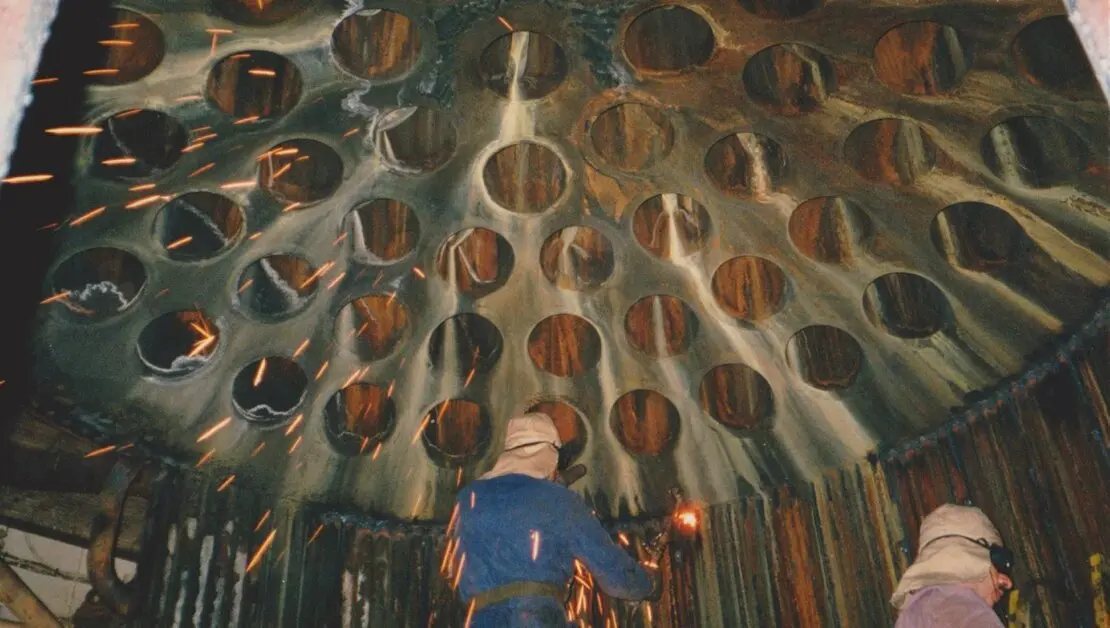
Marine Boiler Tube Inspection & Condition Assessment
Technical examination of accessible boiler tube surfaces and associated components to identify deterioration, leakage indications, corrosion and conditions relevant to retubing requirements.
Boiler & Condenser Retubing Technical Requirements
Retubing work requires appropriate technical planning to ensure that replacement tubes are compatible with the original equipment design and the intended operating conditions.
Tube dimensions, material specifications, wall thickness, mechanical properties and connection arrangements should be established from applicable manufacturer documentation, approved drawings and relevant equipment specifications.
Technical Specification Review
- Original equipment manufacturer requirements and applicable drawings.
- Tube outside diameter, wall thickness and length.
- Tube material grade and applicable material certification.
- Design pressure and operating temperature requirements.
- Fluid characteristics and service environment.
- Tube arrangement, pitch and support configuration.
- Tube-to-tube-plate connection design.
- Applicable expansion, welding or other connection procedures.
- Inspection, examination and testing requirements.
- Relevant classification and statutory requirements where applicable.
Replacement Tube Materials & Selection Considerations
Marine boiler and condenser tubes are manufactured from different metallic materials according to their intended application. The appropriate selection depends on equipment design, operating conditions, corrosion resistance, mechanical requirements and compatibility with existing components.
Carbon Steel Tubes
Used in various boiler and heat-transfer applications subject to the original equipment specification, pressure, temperature and operating environment.
Low Alloy Steel Tubes
Applicable in selected elevated-temperature and pressure-service applications where the equipment design specifies suitable alloy composition and mechanical properties.
Copper Alloy Tubes
Used in certain marine condenser and heat-exchanger applications, subject to seawater compatibility, corrosion characteristics and design requirements.
Stainless Steel Tubes
Applied in selected heat-exchanger arrangements where the grade is suitable for the fluid chemistry, temperature and operating environment.
Duplex Stainless Steel
May be specified for particular corrosive service environments. Selection requires consideration of the design basis and material compatibility.
Other Specialised Alloys
Certain applications may require specialised alloys or alternative materials specified by the equipment manufacturer or engineering design.
The materials listed are examples of materials used in marine tubular equipment. They are not interchangeable recommendations. Final selection must follow the applicable equipment specification and engineering approval.
Retubing Workmanship & Installation Inspection
The quality of retubing depends on appropriate preparation, dimensional control, installation procedures and correct execution of the specified tube-to-tube-plate connection. Inspection should be carried out at suitable stages so that relevant workmanship and dimensional requirements can be verified before the equipment is closed or tested.
Typical Retubing Activities Subject to Inspection
Removal of Existing Tubes
Review of the tube removal method and examination of accessible tube plate openings for visible damage, distortion, scoring or deterioration following removal.
Tube Plate Preparation
Inspection of prepared tube holes and relevant seating surfaces for cleanliness, condition, dimensions and suitability for the specified replacement tube installation.
Replacement Tube Verification
Verification of available tube certificates, identification, material grade, dimensions and condition against the approved technical requirements.
Tube Insertion & Alignment
Inspection of tube positioning, alignment, projection and installation condition against the relevant drawings and approved procedure.
Tube Expansion
Assessment of the specified mechanical expansion process, tooling, procedure and available verification records for applicable expanded connections.
Welded Connections
Where welded tube connections are specified, review of applicable welding procedures, welder qualifications, inspection requirements and examination records.
Retubing Quality Control & Technical Verification
Quality control during retubing is important to ensure that the installed tubes and their connections meet the applicable design and project requirements. The extent of inspection and verification depends on equipment type, connection design, approved procedures and the agreed scope.
Inspection and Verification Points
- Review of approved drawings and retubing specifications.
- Verification of replacement tube identification and material documentation.
- Dimensional checks of tube diameter, wall thickness and length as specified.
- Examination of tube plate openings and prepared seating surfaces.
- Verification of tube alignment and installation position.
- Review of tube expansion procedures and relevant records.
- Inspection of applicable welded connections and workmanship.
- Review of non-destructive examination records where required.
- Examination of completed tube connections and accessible surfaces.
- Review of pressure or leakage testing results.
- Verification of outstanding defects and corrective actions.
Non-destructive examination requirements should be determined by the applicable design, connection type, project specification and relevant acceptance criteria. Not every retubing application requires the same examination methods.
Marine Condenser Retubing Inspection
Condensers are designed to transfer heat between process fluids while maintaining the required separation between the respective circuits. Tube leakage can result in cross-contamination, loss of vacuum performance, deterioration of condensate quality and operational problems.
Marine condenser retubing inspection therefore requires consideration of tube integrity, tube-to-tube-plate connections, tube support arrangements and the operating environment.
Condenser Inspection Areas
Condenser Tube Condition
Examination for corrosion, pitting, erosion, scaling, deformation, cracking indications and other deterioration affecting tube integrity.
Tube Plates & Connections
Inspection of accessible tube plate surfaces, tube holes and tube-to-tube-plate connections for visible damage, deterioration and leakage indications.
Tube Supports & Baffles
Assessment of accessible support plates, baffles and associated components for corrosion, wear, damage and tube support deficiencies.
Water Box & End Connections
Examination of accessible water box surfaces, end covers, internal components and associated sealing arrangements where included in scope.
Leakage & Cross-Contamination
Review of reported leakage, test findings and operational indications that may suggest loss of separation between the condenser circuits.
Post-Retubing Verification
Review of completed installation, applicable pressure or leakage testing, outstanding defects and final technical documentation.
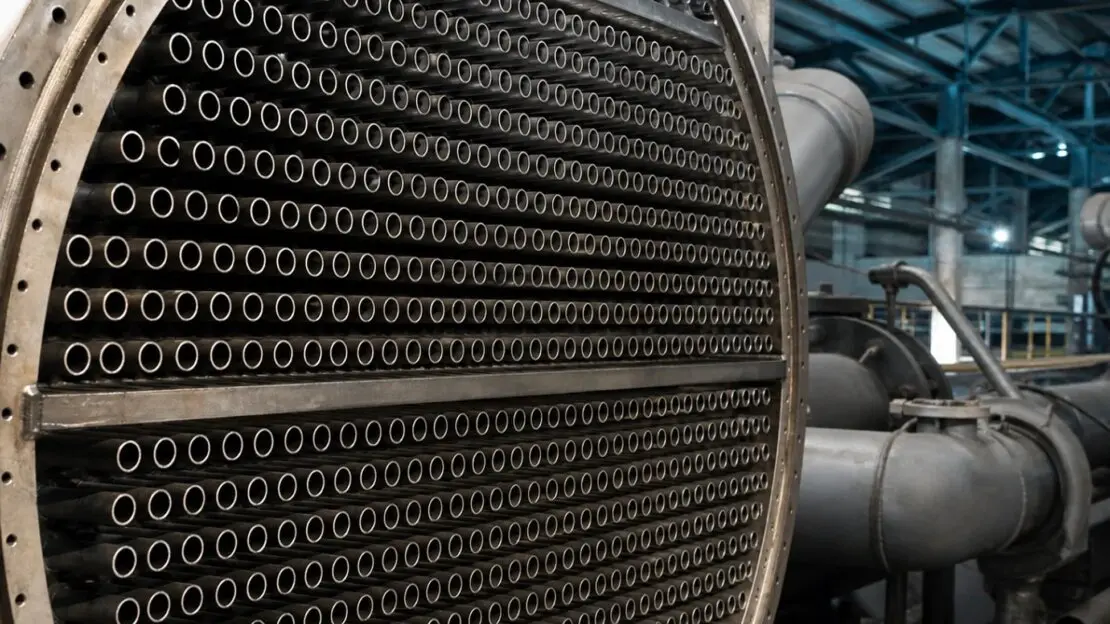
Marine Condenser Tube Bundle & Retubing Verification
Technical examination of condenser tube bundles, tube plates and associated components during retubing and post-installation inspection.
Boiler & Condenser Retubing Testing and Verification
Following completion of retubing, suitable testing should be carried out to establish the integrity of the equipment and the installed tube connections. The test method, pressure, duration and acceptance criteria must follow the applicable equipment documentation and approved testing procedure.
Typical Testing and Verification Activities
Hydrostatic Pressure Testing
Review or witnessing of hydrostatic testing where required by the equipment design and approved procedure, including test conditions and recorded results.
Leakage Testing
Assessment of the specified leakage verification method for tube connections and relevant pressure boundaries.
Tube-Side Examination
Review of available examination findings and accessible tube condition following installation, where required by the agreed inspection scope.
Operational Performance Checks
Review of available operational test results and relevant performance parameters following reinstatement and commissioning.
Test Documentation
Review of test procedures, calibrated instrument records where applicable, test reports, recorded results and acceptance documentation.
Outstanding Defects
Recording and assessment of leakage, rejected connections, abnormal test results and outstanding corrective actions before project close-out.
Engineering Documentation & Retubing Project Review
Technical documentation provides the basis for evaluating the conformity and traceability of retubing work. The documentation review may cover the original equipment requirements, replacement materials, installation procedures and completed inspection records.
Documents That May Be Reviewed
- Original equipment manufacturer drawings and technical specifications.
- Boiler or condenser particulars and relevant equipment data.
- Approved retubing scope and technical work instructions.
- Replacement tube material certificates.
- Tube dimensional inspection records.
- Tube installation and expansion procedure records.
- Applicable welding procedures and qualification records.
- Relevant non-destructive examination reports.
- Pressure and leakage testing documentation.
- Defect reports and corrective action records.
- Completion and handover documentation.
The availability and applicability of these records depend on the equipment type, project specification, class requirements and agreed technical assignment.
Retubing Deficiencies & Failure Mechanism Assessment
Repeated tube failures or premature deterioration may indicate underlying problems that extend beyond the condition of individual tubes. Understanding the likely damage mechanisms is important when evaluating replacement requirements and future reliability.
Common Technical Issues Requiring Investigation
- Recurring tube leakage after previous repairs.
- Premature corrosion or localised wall thinning.
- Tube-to-tube-plate joint leakage.
- Inadequate or inconsistent tube expansion.
- Tube damage during removal or installation.
- Incorrect tube material or dimensional specification.
- Excessive deposits, fouling or scaling.
- Vibration-related wear and tube support problems.
- Inappropriate operating conditions or water chemistry.
- Insufficient inspection or testing evidence.
PAMS Boiler & Condenser Retubing Inspection Procedure
PAMS applies a structured inspection approach based on equipment type, project requirements, available technical documentation and the agreed assignment scope.
1. Technical Scope Review
Review of equipment particulars, original specifications, reported defects, proposed retubing scope and applicable inspection requirements.
2. Existing Condition Assessment
Examination of accessible equipment components, existing tube condition, tube plates, connections and visible deterioration.
3. Material & Specification Verification
Review of replacement tube materials, dimensions, certification and compatibility with the approved technical requirements.
4. Retubing Workmanship Inspection
Inspection of relevant preparation, installation, tube alignment, expansion or welded connections at agreed project inspection stages.
5. Testing & Results Review
Review or witnessing of applicable pressure, leakage and other specified testing, including examination of recorded results.
6. Final Inspection & Reporting
Documentation of findings, deficiencies, inspection limitations, verification results and technical recommendations.
Manufacturer, Classification & Regulatory Considerations
Boiler and condenser retubing projects may be subject to manufacturer requirements, approved equipment specifications, applicable classification rules and relevant statutory provisions.
The applicable requirements depend on equipment type, design approval, vessel classification, service conditions and the nature of the repair or modification.
Relevant Technical References
- Original equipment manufacturer instructions and approved drawings.
- Applicable boiler and pressure equipment design requirements.
- Relevant classification society rules and survey requirements.
- Approved repair and retubing specifications.
- Applicable material and manufacturing standards.
- Approved welding and inspection procedures where relevant.
- Equipment-specific pressure and leakage test requirements.
- Applicable statutory and safety requirements.
The applicability of class attendance, approval, statutory survey or manufacturer acceptance must be established for each individual project. An independent PAMS inspection does not replace any required class or statutory approval.
Boiler & Condenser Retubing Inspection Report
An independent technical inspection report provides a documented record of the equipment condition, inspection activities, available evidence and findings associated with the retubing assignment.
Typical Report Contents
- Vessel identification and relevant particulars.
- Equipment type, manufacturer and identification.
- Inspection location, date and attendance details.
- Agreed inspection scope and applicable references.
- Existing tube condition and observed deterioration.
- Tube plate and associated component observations.
- Replacement tube material and dimensional findings.
- Installation and connection workmanship observations.
- Relevant inspection and testing documentation.
- Photographic records of inspection findings.
- Identified deficiencies and outstanding items.
- Inspection limitations and technical recommendations.
- Final inspection conclusion within the agreed scope.
Independent Marine Engineering & Technical Consultancy
PAMS Pacific Admiralty Maritime Services provides independent marine surveying, technical engineering inspection and compliance consultancy.
Boiler and condenser retubing assignments are approached from an independent technical perspective, focusing on equipment condition, engineering specifications, material verification, workmanship, testing evidence and documented inspection findings.
Our role is to support shipowners, operators and technical departments through independent inspection and engineering assessment, subject to the agreed assignment scope.
Boiler & Condenser Retubing – Frequently Asked Questions
What is boiler and condenser retubing?
Retubing is the replacement of existing tubes in boilers, condensers or other tubular heat exchangers when their condition, leakage, corrosion, deterioration or operational performance requires replacement. The work must follow the applicable equipment specifications and approved procedures.
Which marine equipment may require retubing?
Retubing may be required for marine auxiliary boilers, exhaust gas economisers, steam condensers, freshwater generators and other shell-and-tube heat exchangers, depending on their construction and operating condition.
What are the common reasons for boiler tube replacement?
Common reasons include internal or external corrosion, erosion, pitting, leakage, wall thinning, scaling, overheating, vibration-related damage and other deterioration that affects tube integrity.
What causes condenser tube leakage?
Condenser tube leakage may result from corrosion, erosion, pitting, vibration, mechanical damage, tube-to-tube-plate connection defects or other service-related deterioration. The actual cause requires appropriate examination and supporting technical evidence.
Which materials are used for marine boiler and condenser tubes?
Depending on the equipment design and application, tubes may be manufactured from carbon steel, low alloy steel, copper alloys, stainless steel, duplex stainless steel or other specified alloys. Material selection must follow the original equipment requirements and service conditions.
Can different tube materials be used during retubing?
Alternative materials should not be substituted without appropriate engineering evaluation and approval. Compatibility must be assessed against the equipment design, operating conditions, fluid characteristics and applicable manufacturer requirements.
What is tube expansion during retubing?
Tube expansion is a mechanical process used in applicable designs to establish the required tube-to-tube-plate connection. The expansion procedure and acceptance requirements depend on the equipment design, tube material, tube plate arrangement and approved specification.
Are boiler and condenser tubes always welded?
No. Tube connections may use mechanical expansion, welding or other specified arrangements depending on the equipment design. The correct connection method must be established from the original drawings and approved technical procedure.
What inspections are required during retubing?
Depending on the assignment, inspection may include tube material verification, dimensional checks, tube plate preparation, tube alignment, expansion or welding workmanship, relevant non-destructive examination and post-installation testing.
Is hydrostatic testing required after retubing?
Testing requirements depend on equipment design, the nature of the work, applicable manufacturer instructions, classification requirements and approved procedures. Where hydrostatic testing is specified, it must be carried out at the prescribed conditions and acceptance criteria.
Can condenser tube leakage cause cross-contamination?
Yes. Depending on the condenser arrangement and operating pressure conditions, a leaking tube may allow fluid transfer between circuits. This can affect condensate quality, system integrity and equipment operation.
What documents should be reviewed during a retubing project?
Relevant documents may include original equipment drawings, technical specifications, replacement tube certificates, dimensional inspection records, installation procedures, welding or expansion records, non-destructive examination reports and pressure or leakage test documentation.
Can PAMS inspect boiler and condenser retubing work?
PAMS Pacific Admiralty Maritime Services provides independent marine engineering inspection, technical assessment and quality verification consultancy for boiler and condenser retubing assignments, subject to the agreed scope and availability.
Does PAMS physically undertake boiler or condenser retubing?
No. PAMS provides independent technical consultancy, inspection, supervision and verification. Physical tube removal, replacement, expansion, welding and repair work are performed by the appointed repair contractor or qualified workshop personnel.
What does a boiler or condenser retubing inspection report contain?
A report may include equipment identification, inspection scope, existing tube condition, replacement material verification, workmanship findings, relevant photographs, testing documentation, identified deficiencies and technical recommendations.
Can retubing inspection be arranged during a dry-docking project?
Yes. Retubing inspection and technical verification may be incorporated into a planned dry-docking, repair period or other suitable maintenance assignment, subject to equipment accessibility, project scheduling and the agreed inspection scope.
Technical Inspection Scope & Limitations
This service covers independent technical assessment and inspection relating to marine boiler and condenser retubing. The exact scope is established according to equipment type, available documentation, project requirements and inspection arrangements.
Inspection findings are based on accessible areas, available technical evidence and the examination methods included in the assignment. Where additional measurements, specialist testing, material analysis or manufacturer evaluation are necessary, these requirements should be identified separately.
Independent inspection does not replace manufacturer approval, statutory certification, classification society attendance or any other approval required for the particular equipment or repair project.
Require Independent Boiler or Condenser Retubing Inspection?
Contact PAMS Pacific Admiralty Maritime Services to discuss marine boiler inspections, condenser retubing technical assessment, replacement tube verification, workmanship inspection and independent engineering consultancy.
Contact PAMS Marine Survey Services Dry-Dock Repair Attendance